
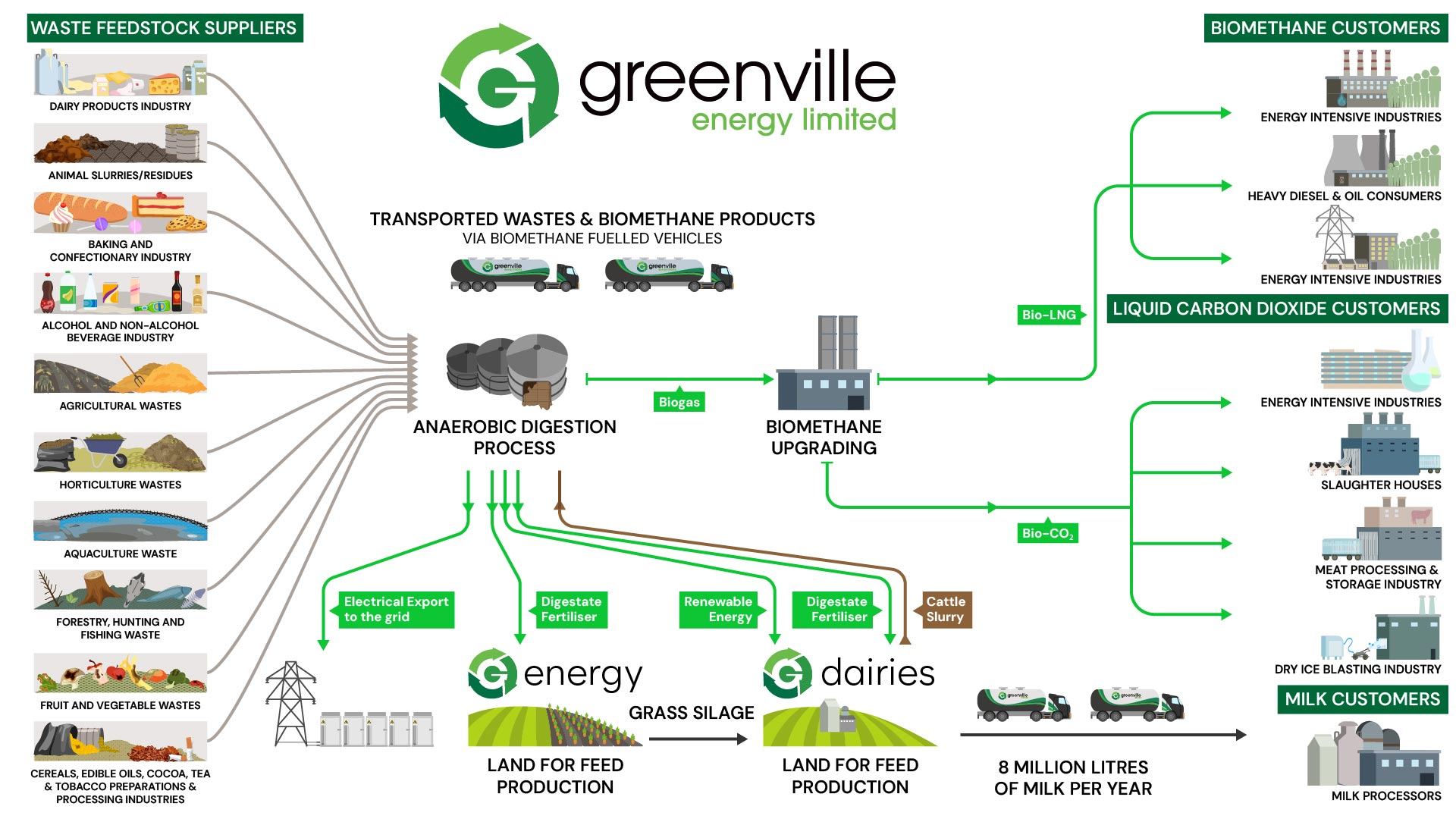
At Greenville Energy, biogas production is an integral part of our commitment to renewable energy, waste management, and environmental stewardship.
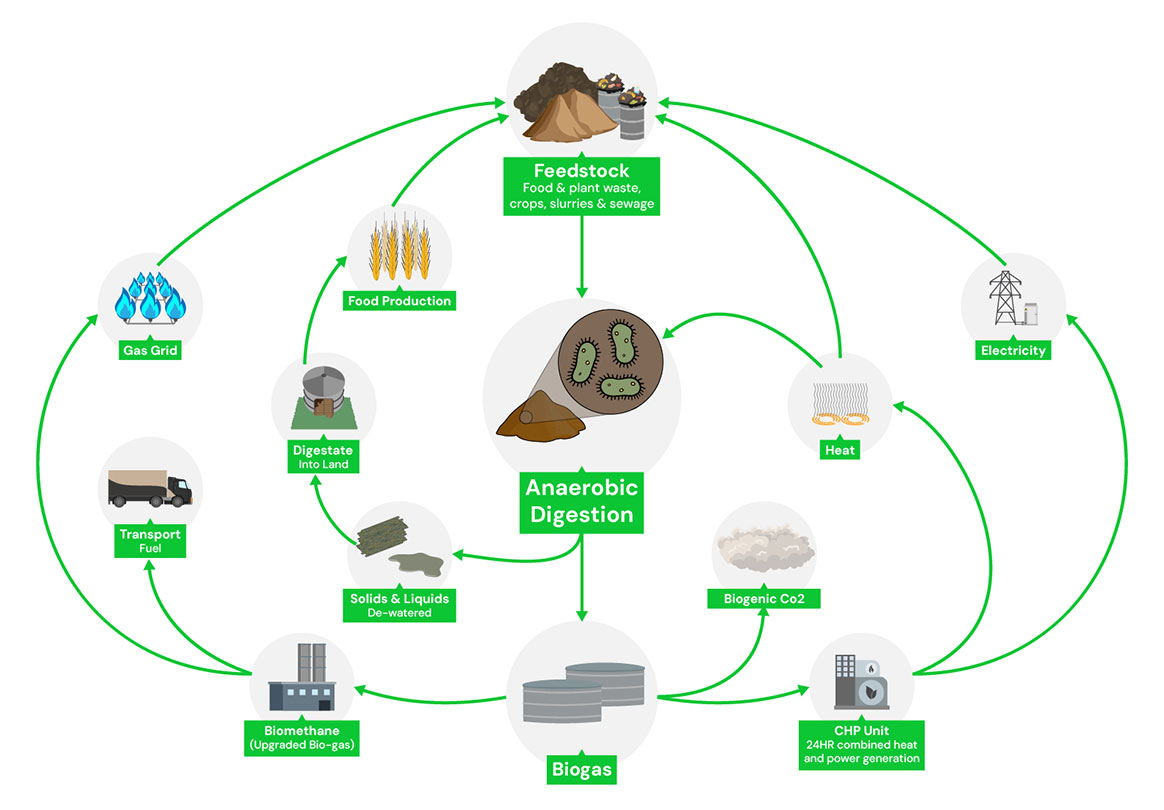
Biogas, primarily composed of methane (CH₄) and carbon dioxide (CO₂), is generated through anaerobic digestion.
This process harnesses the natural breakdown of organic material—specifically waste materials like food waste and by-products from commercial food production—under oxygen-free conditions.
Importantly, Greenville Energy does not grow crops for energy production; all biogas is derived from waste resources, aligning with our sustainable and zero-emission objectives.

Biogas consists mainly of two primary gases: methane (CH₄) and carbon dioxide (CO₂), with trace amounts of other gases. Methane, a hydrocarbon gas, serves as the key energy carrier in biogas, providing the fuel for heat, power, and further refinement into biomethane. Here’s a detailed look at these molecules:

Greenville Energy’s production process results in a methane-rich biogas that can be combusted cleanly with minimal air pollutants. By using waste-derived biogas as a renewable energy source, we significantly reduce reliance on fossil fuels and decrease greenhouse gas emissions. Importantly, our methane production is carbon-neutral because the CO₂ emitted during combustion is part of the natural carbon cycle, derived from renewable organic waste.
Through this approach, Greenville Energy not only fulfills current energy needs but also contributes to a sustainable energy future that aligns with stringent environmental standards and regulatory requirements. By producing clean, renewable energy from waste, we close the loop in energy production and contribute to a circular economy that values waste as a resource.
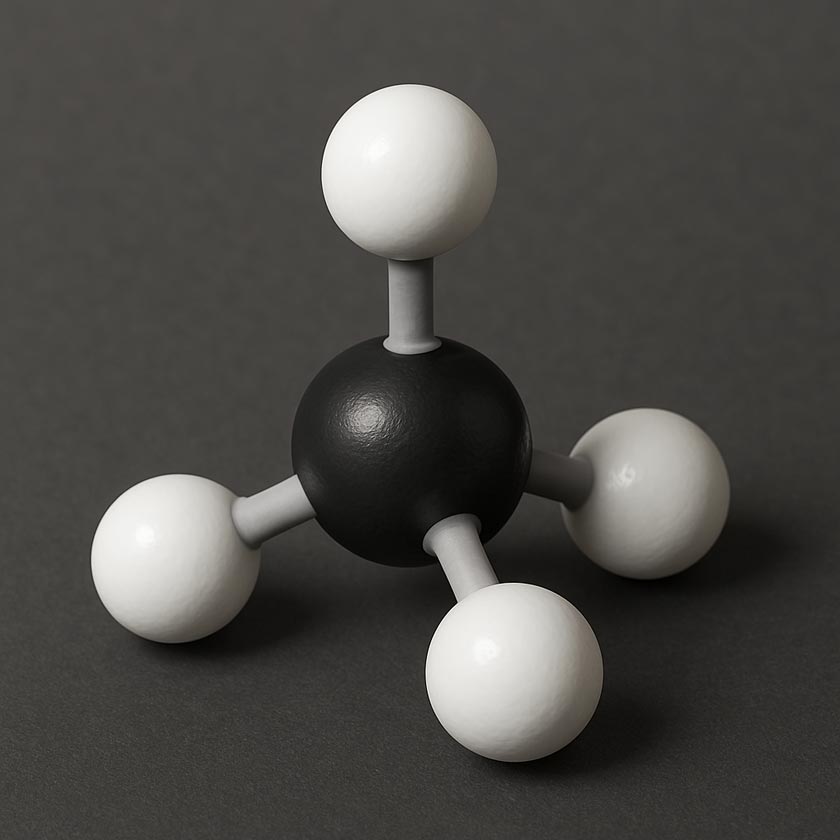
Methane, the most energy-rich component of biogas, typically makes up about 50-70% of the total biogas mixture. Each methane molecule consists of one carbon atom (C) bonded to four hydrogen atoms (H₄), forming a tetrahedral structure. This configuration gives methane its stability and high-energy potential, as the carbon-hydrogen bonds release significant energy when burned. The combustion of methane is highly efficient and produces mainly water vapor (H₂O) and carbon dioxide (CO₂) as by-products, making it a cleaner alternative to fossil fuels.
Carbon dioxide typically makes up about 25-50% of biogas. Unlike methane, CO₂ does not contribute directly to energy production in biogas, but its presence can influence the gas’s caloric value and efficiency. CO₂ molecules consist of one carbon atom double-bonded to two oxygen atoms in a linear configuration. The anaerobic digestion process naturally produces CO₂ as microbes digest the organic waste, and while CO₂ reduces the energy density of biogas, it plays a valuable role in carbon-neutral energy production since it does not contribute additional CO₂ to the atmosphere.
Biogas also contains minor concentrations of other gases, including hydrogen sulfide (H₂S), nitrogen (N₂), water vapor (H₂O), and oxygen (O₂). While they make up a small percentage, these gases play specific roles: