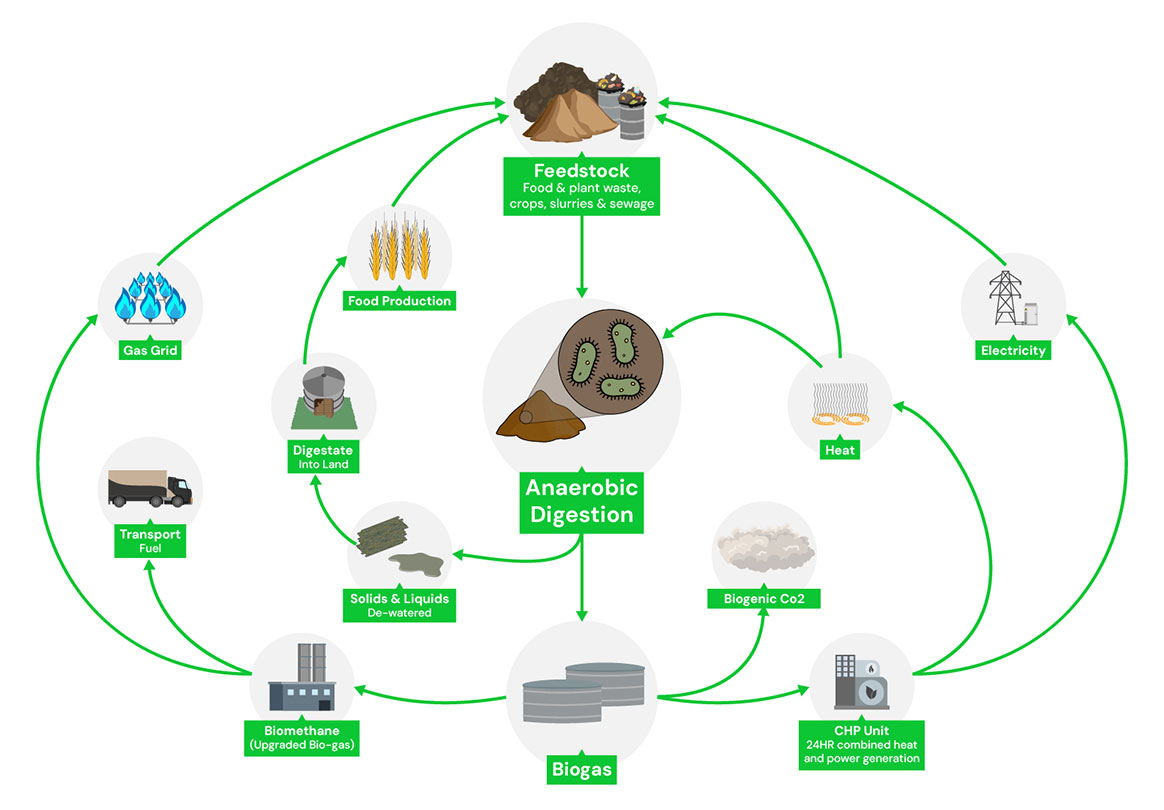

At Greenville Energy, we operate a closed-loop circular economy model that maximises resource efficiency and minimises environmental impact. Organic waste streams- such as food waste, slurry, and agricultural residues – are collected from our clients and fed into our high-performance anaerobic digestion (AD) systems. Through a controlled, multi-stage microbial process, this material is broken down in oxygen-free conditions to generate raw biogas (typically ~60% methane, ~40% CO₂).
The biogas then undergoes upgrading via membrane separation and CO₂ liquefaction to produce high-purity biomethane (CH₄), compliant with grid and transport fuel standards. This renewable gas is supplied back to our clients as a direct substitute for natural gas – completing a sustainable energy loop that not only displaces fossil fuels but also supports carbon reduction targets and regulatory compliance.

1. Hydrolysis
In the first stage, complex organic matter such as fats, proteins, and carbohydrates are broken down by enzymes into simpler, soluble molecules like sugars and amino acids. This step is essential for making the waste digestible for microorganisms.
2. Acidogenesis
Next, acidogenic bacteria convert the products of hydrolysis into volatile fatty acids, along with ammonia, hydrogen, and carbon dioxide. This stage creates the building blocks for gas production.
3. Acetogenesis
In this phase, the volatile fatty acids are further broken down by acetogenic bacteria into acetic acid, hydrogen, and carbon dioxide – key precursors for methane formation.
4. Methanogenesis
Finally, methanogenic archaea convert acetic acid and hydrogen into biogas, primarily composed of methane (CH₄) and carbon dioxide (CO₂). This is the critical stage where renewable energy is produced, ready for use or upgrading to biomethane.




Anaerobic digestion (AD) is a complex biochemical process in which microorganisms break down organic matter, such as agricultural residues, food waste, and sewage sludge, in an oxygen-free environment. This process occurs in a sealed vessel known as a digester, where microorganisms degrade the organic waste into simpler compounds. The primary byproduct of this microbial activity is biogas, a mixture of gases, predominantly methane (CH₄) and carbon dioxide (CO₂), which can be harnessed for energy production.
Anaerobic digestion occurs in four stages: hydrolysis, acidogenesis, acetogenesis, and methanogenesis.
The biogas is captured and purified to remove impurities, such as hydrogen sulfide and carbon dioxide, ensuring that methane is available for energy use.
Greenville Energy embraces anaerobic digestion to convert organic waste into renewable energy while supporting sustainable waste management. Biogas produced from AD can replace fossil fuels for heating, electricity generation, or upgraded to biomethane for use as vehicle fuel. Additionally, the digestate leftover after the digestion process is rich in nutrients and can be processed into biofertilizer, contributing to sustainable farming practices by replenishing soil fertility.
By diverting organic waste from landfills, AD helps reduce methane emissions, which are a potent greenhouse gas. This circular process supports the reduction of fossil fuel dependency and plays a vital role in reducing global carbon footprints.
As the leading company in the UK and Ireland, Greenville Energy is at the forefront of advanced anaerobic digestion technology. We optimize every stage of the digestion process with highly engineered digesters and control systems, ensuring high methane yields and efficient energy conversion. Our expertise allows us to handle a diverse range of organic materials, maximizing the sustainability and economic viability of waste-to-energy solutions. Our state-of-the-art monitoring and management systems ensure that the process runs smoothly, with minimal environmental impact.
Waste management involves the systematic handling of waste materials, from collection to treatment and disposal, to minimize environmental harm. At Greenville Energy, we focus on organic waste streams, which, through advanced treatment processes like anaerobic digestion, can be converted into renewable energy and valuable byproducts. Proper waste management reduces landfill dependency, conserves natural resources, and reduces harmful emissions from waste.
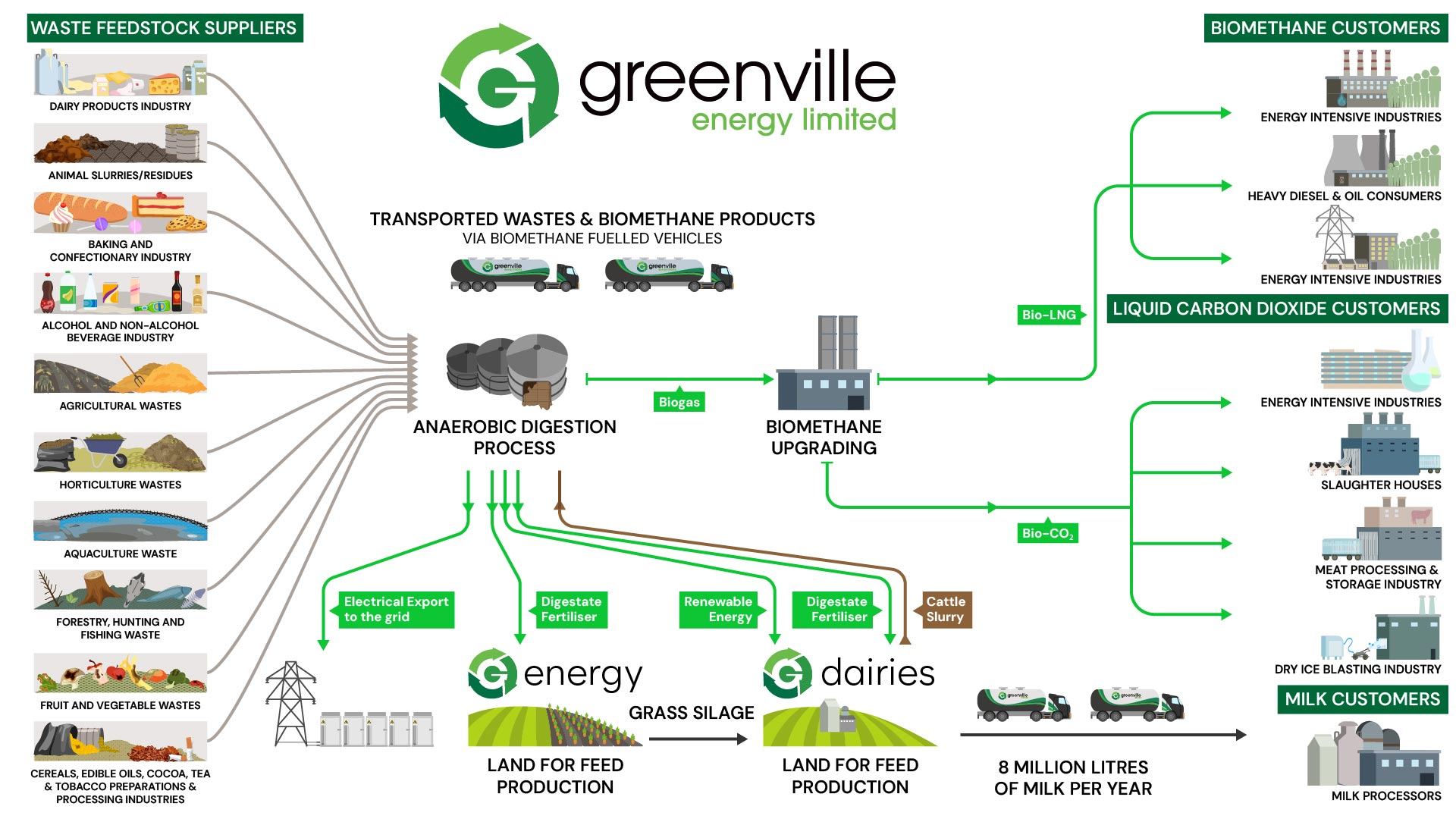
Waste management at Greenville Energy follows a closed-loop model. Organic waste, such as agricultural byproducts, food waste, and manure, is separated from other waste streams and directed into anaerobic digesters, where it is converted into biogas. We also employ advanced sorting techniques to ensure that recyclable and non-recyclable materials are handled according to regulatory standards. The residual non-organic materials are then disposed of in a responsible manner, minimizing landfill usage.
Our waste management process is integrated with our energy systems, allowing us to produce electricity, heat, and biomethane from organic waste. The resulting digestate, rich in nutrients, is transformed into biofertilizer, closing the loop and returning valuable resources back to agriculture.
By properly managing waste, we reduce methane emissions from landfills, conserve landfill space, and prevent contamination of soil and water. Furthermore, waste-to-energy technologies, like anaerobic digestion, offer a sustainable solution to both waste management and energy production, reducing our reliance on non-renewable resources.
Greenville Energy’s waste management approach also aids in the reduction of environmental pollutants such as nitrogen and phosphorus runoff from organic waste, which can otherwise contaminate waterways and harm aquatic ecosystems.
Greenville Energy’s waste management solutions are designed with cutting-edge technologies that maximize the value of waste materials. Our advanced systems ensure that all waste is repurposed efficiently, either for energy generation or as a resource for agricultural inputs, such as biofertilizers. We are committed to reducing the environmental impact of waste, and our state-of-the-art facilities and processes guarantee minimal waste disposal to landfill.
Following anaerobic digestion, the digestate undergoes further processing to concentrate nutrients and stabilize the material. This is typically achieved through composting, fermentation, or drying. Composting allows the material to break down further, while fermentation and drying help to reduce moisture content and stabilize the nutrients, making the biofertilizer suitable for agricultural application. The final product is then used to replenish nutrients in soil, improve microbial activity, and increase soil carbon content.
Greenville Energy produces high-quality biofertilizers that are rich in organic matter and essential nutrients, ensuring effective soil revitalization. Our sophisticated biofertilizer production systems are designed to retain maximum nutrient value and stability, providing farmers with an eco-friendly alternative to chemical fertilizers. We are committed to improving soil health, reducing chemical dependency, and promoting sustainable farming practices through the use of our biofertilizers.
Biomethane upgrading is the process by which raw biogas, produced from organic waste via anaerobic digestion, is purified to remove contaminants such as carbon dioxide (CO₂), hydrogen sulfide (H₂S), and moisture, leaving behind methane (CH₄) as the primary energy source. The resulting biomethane is a clean, renewable alternative to fossil fuels, which can be used in natural gas grids, for heating, power generation, or as vehicle fuel.
The raw biogas undergoes a purification process that typically involves three main steps:
The upgraded biomethane is then compressed and can be injected into natural gas grids, used for industrial purposes, or as a substitute for fossil fuels in vehicles.
Upgrading biogas to biomethane creates a clean, renewable energy source that can replace natural gas and other fossil fuels. Biomethane is carbon-neutral, as it is derived from organic waste, which would otherwise release CO₂ into the atmosphere during decomposition. By utilizing biomethane, Greenville Energy helps reduce dependence on fossil fuels, cuts greenhouse gas emissions, and promotes a circular economy.
Greenville Energy’s biomethane upgrading systems are state-of-the-art, using the latest purification technologies to produce high-purity biomethane. Our systems are designed for maximum efficiency and low environmental impact, ensuring that the biomethane we produce is of the highest quality. As a leader in renewable energy solutions, we are committed to providing sustainable, clean energy alternatives to help meet global carbon reduction goals.
CO₂ liquefaction is the process of converting carbon dioxide gas into its liquid form by cooling it to subzero temperatures and applying high pressure. This liquid CO₂ can be stored, transported, and utilized for various industrial purposes, or it can be sequestered underground as part of carbon capture and storage (CCS) initiatives to reduce atmospheric CO₂ concentrations and combat climate change.
The CO₂ captured from anaerobic digestion and other processes at Greenville Energy is compressed and cooled to a temperature below its critical point, typically below -78°C, where it transitions into a liquid phase. The liquid CO₂ is then stored in specialized tanks and can be transported for use in a variety of industries, including food and beverage production (carbonating drinks), chemical manufacturing, and even carbon-neutral energy systems.
CO₂ liquefaction plays a critical role in addressing the climate crisis by enabling the capture and safe storage or use of carbon dioxide. Liquefied CO₂ can be utilized in applications such as enhanced oil recovery, where it is injected into oil fields to increase extraction rates, or in industrial processes that require CO₂. Additionally, liquefied CO₂ can be used as a carbon-neutral fuel source, further contributing to a reduction in overall emissions.
As the only company in the UK and Ireland capable of liquefying LNG and CO₂, Greenville Energy is a pioneer in carbon capture and storage solutions. Our cutting-edge liquefaction technology ensures that captured CO₂ is efficiently transformed into a liquid form for safe transport, storage, and use. We are leading the way in providing sustainable solutions for carbon management, helping to reduce global emissions and contribute to a low-carbon economy.
Once the organic material has been processed through the anaerobic digester and has had all the biogas potential released you are left with a nutrient rich fertiliser which can be used on the land as fertiliser. This fertiliser can be used as a direct replacement to chemical fertilisers produced using fossil fuels and therefore brings many environmental benefits.
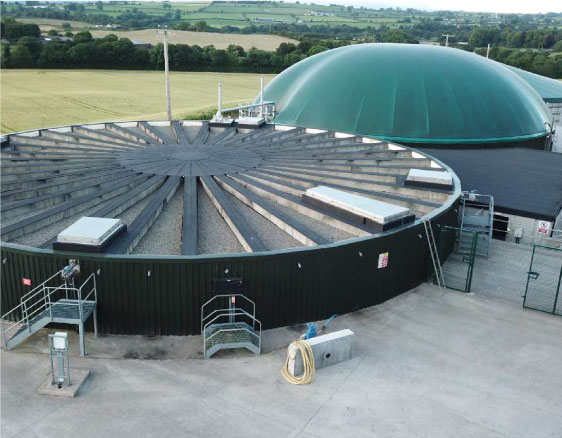
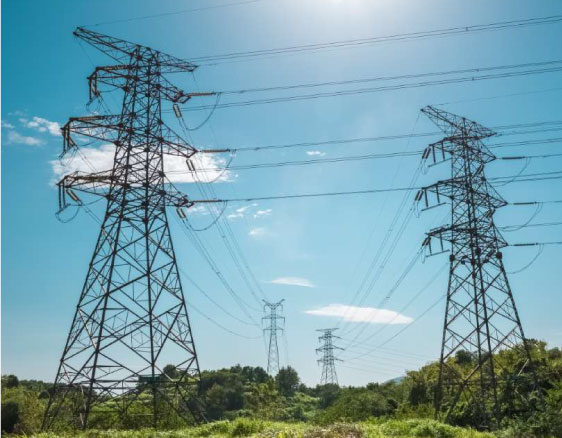
The gas produced by the bacteria is then used to fuel two generators which produce electrical and heat energy for use on the adjacent dairy farm. Power to Grid Any excess electrical energy produced by the generators is exported onto the national grid for consumption by local homes and businesses.
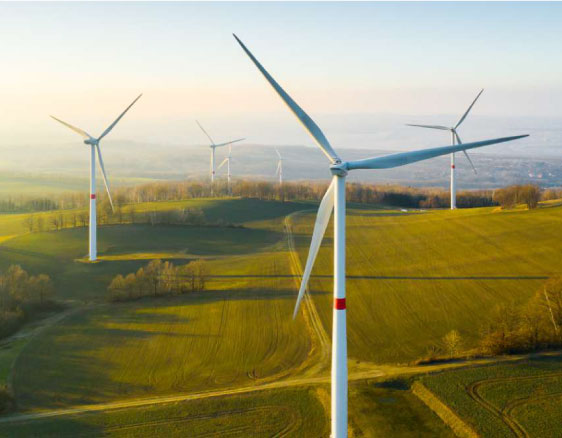
The biogas produced in the anaerobic digester is used to fuel electrical generators and the electricity is fed into the national grid to supply businesses and homes with renewable energy.
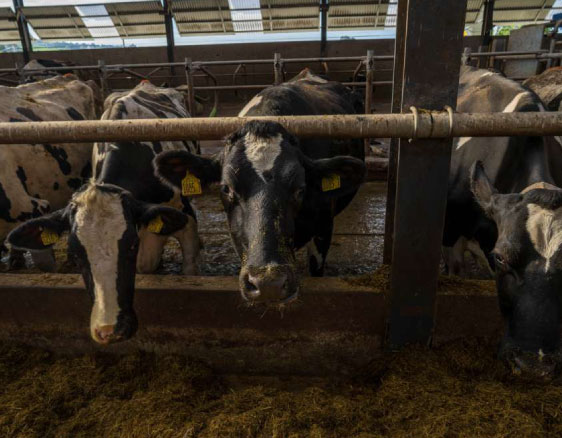
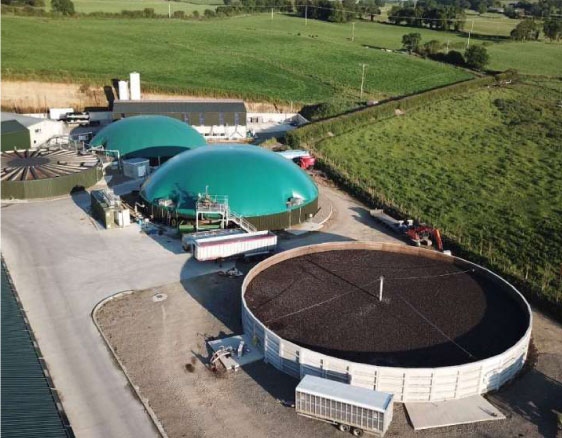
An anaerobic digester is often referred to as a ‘concrete cow’ as they mirror what occurs in nature within a cows stomach. The organic material is heated to around 40°C to provide an environment suitable for the bacteria that breakdown the organic material and turn it into biogas.
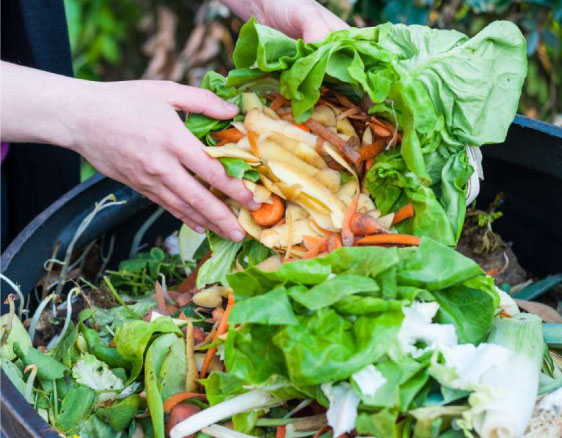
Waste from food processors, hotels, cafes, supermarkets, wholesalers and various other sources is diverted from landfill and utilised to produce renewable energy
The benefits that digestate can bring to crop growth is widely recognised around the world. The nutrient rich digestate contain nitrogen, phosphorous, phosphate and other trace elements which are essential for soil health and crop growth.
Waste from the farm such as cattle slurry, farmyard manure and waste silage are all utilised to produce renewable energy